
On January 14, 2026, the British Columbia government announced that it would not ask Health Canada to extend the federal exemption that allowed the decriminalization of possession of small amounts of certain drugs for personal use. Accordingly, the pilot project will end on January 31, 2026.
This decision concludes three years of one of Canada's most high-profile social and medical experiments: the government attempted to reduce stigma, fear of the police, and barriers to seeking help — but, according to Provincial Health Minister Josie Osborne, the program “did not deliver the results we had hoped for.”
What exactly was “decriminalized” and how did the 2.5-gram rule work?
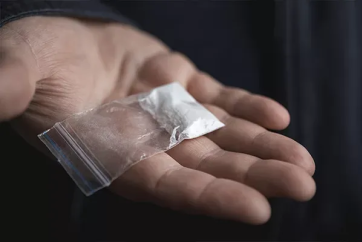
The pilot program in British Columbia began on January 31, 2023, after the federal government granted the province a three-year exemption from the Controlled Drugs and Substances Act. This allowed adults to carry up to 2.5 grams of certain illegal substances (including opioids, cocaine, methamphetamine, and MDMA) without criminal liability for possession under certain conditions.
Important: this was not legalization and did not mean “free circulation” — the idea was to remove the criminal component for small doses so that people would be more willing to seek treatment and support.
Why the rules began to “tighten the screws” even before the pilot was completed
Even during the implementation of the project, there were strong public and political controversies: critics linked the approach to a sense of disorder in public spaces and questioned whether it really reduced harm and mortality from overdoses.
As a result, in 2024, the approach was significantly changed: storage of the same volumes became permissible mainly in private homes, in places where homeless people have a legal right to stay/sleep, as well as in a number of specialized medical and harm-reduction locations (overdose prevention points, substance testing, controlled consumption, etc.).
Human rights organizations called these changes a step toward “recriminalization,” arguing that tightening the rules brings back fear and shifts the problem from the field of medical care to the field of punishment.
What “went wrong”: the main reasons for the rollback
Officially, the provincial government explains the decision as follows:
-
The expected effect did not materialize. The logic of the pilot was simple: if people are not afraid of criminal prosecution for small doses, they will seek treatment more often, and their contact with the support system will become more regular. According to Osborne, the government did not see this level of results.
-
Pressure regarding public spaces and safety. It was the wave of discontent with “open use” and the visibility of the problem in certain areas that became one of the reasons why the rules were made significantly stricter in 2024 (with the actual transfer of permitted scenarios to private/special spaces).
-
The pilot is ending, and an extension has not been agreed upon. Since the exemption was for three years and is set to end on January 31, 2026, the BC government had to either request an extension or move to a different model. The second option was chosen — no extension of the exemption.
What will happen after January 31, 2026
After the exemption ends, the province says it will focus on “strengthening approaches that help people get timely and appropriate help” — with an emphasis on a comprehensive mental health and addiction care system: prevention, treatment, harm reduction, recovery, and aftercare.
At the same time, a return to the “old normal” means that the criminal law risk for possession of small doses becomes more real again (depending on specific circumstances and law enforcement), and the debate about the balance between health, safety, and human rights is unlikely to subside.
Why this story is important for all of Canada
BC was the first jurisdiction in Canada to receive such a large-scale exemption, so its experience has been closely studied by both supporters and opponents of the reform.
In a global context, different countries and regions have chosen different models: from complete decriminalization of use (as in Portugal) to “rollbacks” and revisions of approaches elsewhere. The situation in BC shows that a single change in the law does not solve the crisis on its own — without parallel access to treatment, housing, mental health support, and an effective harm reduction system, the outcome may not meet expectations.
Conclusion
The decriminalization pilot in British Columbia will end on January 31, 2026, and the provincial government will not seek to extend it.
For some, this is proof that the model “did not work.” For others, it is a signal that the problem was not so much the idea of decriminalization itself, but rather the lack of a large-scale support infrastructure and political pressure due to the situation in public spaces.
Regardless of how this experiment is evaluated, it has already become an important case study for Canada: what exactly needs to work alongside legislative changes so that the policy truly saves lives — while maintaining a sense of safety and order in cities.