
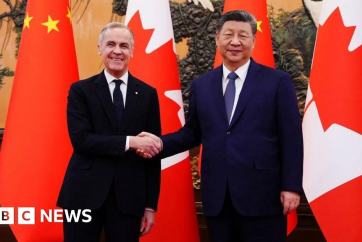
On January 16, 2026, Canada and China announced steps to de-escalate trade tensions following talks in Beijing between Canadian Prime Minister Mark Carney and Chinese President Xi Jinping. The agreements focus on Canadian canola (rapeseed) and access for Chinese electric vehicles to the Canadian market.
This is a preliminary agreement-in-principle, which provides for the reduction/easing of certain tariffs with specific implementation dates.
Key terms: canola, seafood, and Chinese EV quota
1) China: reduction of tariffs on canola
Canada expects China to reduce total tariffs on Canadian canola seeds to approximately 15% (compared to the current level of about 85%) by March 1, 2026. The Canadian statement emphasizes that China is an approximately $4 billion market for Canadian producers.
Separately, Reuters reports that Canada also expects the removal of “anti-discriminatory” tariffs on some Canadian exports — specifically canola meal, lobsters, crabs, and peas — from March 1 until at least the end of the year.
2) Canada: “tariff quota” for Chinese electric vehicles
Canada has announced that it will allow up to 49,000 Chinese electric vehicles per year under an MFN tariff of 6.1%. The announcement also notes that this is less than 3% of the Canadian new car market and that the volume corresponds to the level of imports before the trade dispute escalated (2023–2024).
The Canadian statement says that the agreement is expected to stimulate joint ventures in Canada over the next few years and make EVs more affordable for consumers (in particular, with a stated target for the affordability of a portion of imports).
Why did the parties agree to a tariff “reset” in the first place?
The media describe the current agreement as an attempt to “reset” relations after prolonged tensions and mutual restrictions.
Reuters adds context: the tariff measures were mutual and painful for certain sectors, and the current decisions are presented as a de-escalation of trade barriers following meetings in Beijing.
Reaction in Canada: support from the agricultural sector and criticism from the automotive industry
According to Canadian media reports, the agreement has received mixed reviews:
- Representatives of the automotive sector and some politicians are expressing concern about the expansion of access for Chinese EVs.
- At the same time, the prairies and agricultural groups are positive about the prospect of lower tariffs on canola and other goods.
What this could mean for consumers and businesses
For farmers and exporters
If the tariff reduction does indeed take effect on March 1, 2026, Canadian suppliers of canola and related products will have a chance to restore/increase sales in one of their key markets.
For the auto market
The 6.1% “tariff quota” on Chinese EVs could potentially:
- increase supply and competition in the electric vehicle segment in Canada,
- but at the same time intensify the debate about protecting local production and jobs.